– Ship Everywhere in Pakistan GraceSurgical.pk We want you to love our products. If you are not completely satisfied with your purchase you can return it free within 7 days, no questions asked. Learn more
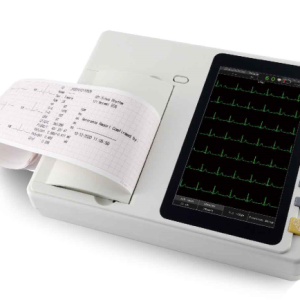
A patient monitor touch screen is a user-friendly, interactive display for vital signs, allowing clinicians to tap, swipe, and adjust settings for ECG, SpO2, NIBP, temperature, and respiration, replacing physical buttons with intuitive fingertip control, often featuring robust, easy-to-clean surfaces and bright color LCDs for real-time monitoring and quick alerts in diverse clinical settings.
Key Features
Intuitive Control: Direct interaction via touch (tap, swipe) for easy navigation, parameter changes, alarm adjustments, and waveform management, even with gloves.
Vibrant Display: High-resolution color TFT or LCD screens (e.g., 12.1″, 15″) for clear viewing of multiple waveforms (ECG, SpO2, etc.) and data.
Vital Sign Monitoring: Tracks essential parameters like ECG, SpO2 (Oxygen Saturation), NIBP (Non-Invasive Blood Pressure), Heart Rate (PR), Respiration (RESP), and Temperature (TEMP).
Customizable Alarms: Adjustable sound, light, and visual alerts for immediate notification of critical changes, with settings tailored to clinical needs.
Rugged & Cleanable: Designed with antimicrobial surfaces and disinfectant-resistant materials for hygiene and durability in medical environments.
Scalable & Networkable: Supports optional modules (EtCO2, IBP, Anesthesia Gas) and connects to central monitoring systems.



Reviews
There are no reviews yet.